Losing your sight — or watching someone you love lose theirs — comes with a hundred questions and no instruction manual. This is the front door: plain answers, first steps, and people who’ve been where you are. Start with whichever one sounds like you.
Make your home accessible
Your house doesn’t need a remodel. It needs a system: mark what’s flat, make what’s silent talk, and give everything a place your hands can find. Work through this guide room by room — each item explains what it is, how it works, and exactly what to put it on. When you’re ready for prices and ratings, each item links straight to its page in Shopping & Reviews. The guide teaches; the shopping section sells.
The one rule that makes all of it work: pick a code and never change it. One bump dot shape always means “start,” another always means “stop,” the same shelf is always the coffee shelf. Consistency is the accessibility — the products below are just how you build it.
Start everywhere: mark what’s flat
Bump dots & tactile markers
What it is: A sheet of peel-and-stick raised shapes — dots, squares, bars — for under ten dollars. How it works: stick one on a button and that button becomes findable by touch, forever, no batteries. Use different shapes for different jobs and the same code in every room.
Put them on:
- Microwave: Start, Stop, and the +30 seconds button.
- Oven and stove panels: bake, broil, and the up-arrow for temperature.
- Washer and dryer: your everyday cycle position on the dial, and the Start button.
- Dishwasher: the normal cycle and Start.
- TV remote: power, volume up, and the OK/select button.
- Thermostat buttons, keyboard keys (F and J already have bumps — add them to keys that don’t), and the 5 on any keypad that lacks one.
See bump dots & tactile markers in Shopping & Reviews — prices, ratings, and where to buy →
The kitchen
Liquid level indicators
What it is: A small clip-on gadget with two or three metal prongs. How it works: hang it on the rim of a cup with the prongs inside; pour; the second the liquid touches the prongs it beeps — or, in the vibrating version, buzzes against the cup — and you stop pouring before it overflows. It exists so you never have to test hot coffee with a fingertip again.
Use it with: coffee mugs and teacups, a measuring jug for hot water, and any glass you fill from a kettle or coffee maker.
See liquid level indicators in Shopping & Reviews →
Talking kitchen scale
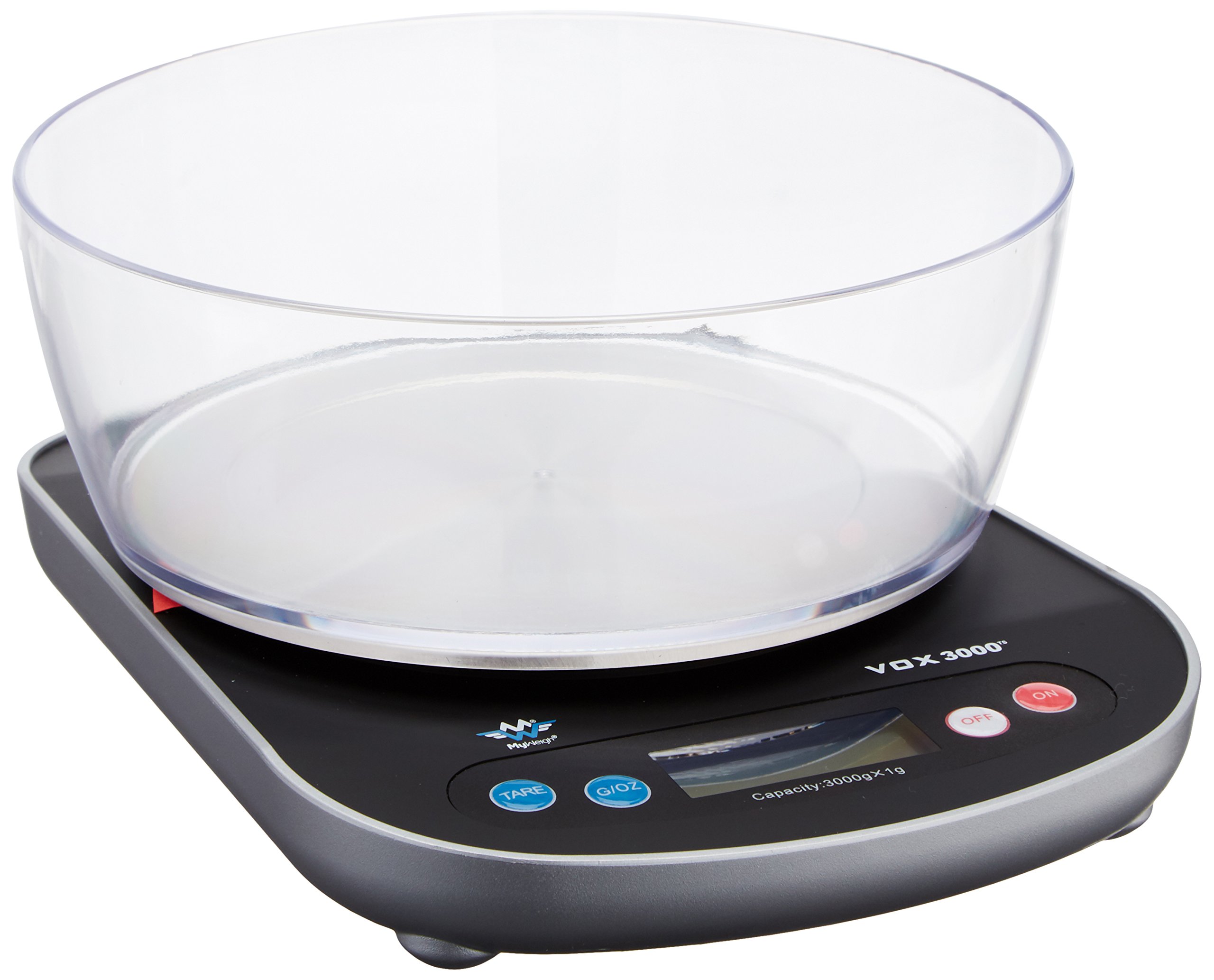
What it is: A flat kitchen scale that speaks. How it works: set a bowl on it, press the tare button to zero out the bowl’s weight, pour, and it announces the weight aloud as you go — grams, ounces, or pounds. Baking by weight, portioning coffee, and weighing a package for postage all become solo jobs.
Use it with: flour and sugar for baking, coffee beans, recipe ingredients, and parcels you’re mailing.
See talking kitchen scales in Shopping & Reviews →
Talking kitchen thermometer
What it is: A probe thermometer with a voice button. How it works: push the probe into the thickest part of the food, press the button, and it speaks the temperature — the difference between guessing the chicken is done and knowing it is.
Use it with: roasts, chicken, and burgers; soups and sauces; bath water for a baby or grandchild; oil for frying.
See talking kitchen thermometers in Shopping & Reviews →
Talking timer
What it is: A countdown timer that speaks every button press while you set it, and tells you the remaining time whenever you press to ask. How it works: no reading a display, no counting beeps — you set it by ear and check it by ear.
Use it with: anything in the oven, pasta water, laundry cycles, and steeping tea. Or ask a smart speaker — next item — if one lives in your kitchen.
See talking timers in Shopping & Reviews →
Audio labels for food, spices, and medicine
What it is: The PenFriend is a pen-sized player with stick-on labels you record your own voice onto. How it works: stick a label on a can or bottle, hold the pen tip to it, record “cumin — bought in June,” and every touch after that plays your message back. Washable versions go on clothing. It’s how a pantry full of identical-feeling cans becomes a pantry you can read.
Put labels on: canned goods, spice jars, freezer containers and leftovers (add the date), medicine bottles, cleaning bottles — cleaning chemicals matter most; never guess those — CDs and files, and clothing with the washable labels.
See the PenFriend 3 audio labeller in Shopping & Reviews →
The bathroom & health shelf
Talking bathroom scale
What it is: A bathroom scale that announces your weight out loud when you step on it. How it works: step on, stand still, listen. No display, no app, nothing to bend down and read.
Use it: in the bathroom, on hard level flooring, in the same spot every time — carpet makes any scale drift.
See the Taylor talking bathroom scale in Shopping & Reviews →
Talking blood pressure monitor
What it is: A home blood pressure cuff that talks you through the measurement and reads the result — systolic, diastolic, pulse — aloud. How it works: the cuff inflates automatically, and where an ordinary monitor leaves the numbers sitting silently on a screen, this one says them and stores them.
Use it: at the kitchen or bedside table, same time of day, and label the cuff’s storage spot with an audio label so the whole kit lives in one place.
See the A&D talking blood pressure monitor in Shopping & Reviews →
The rest of the house
A smart speaker as the house voice
What it is: An Amazon Echo or Echo Dot — a mainstream speaker that runs on voice alone. How it works: timers while your hands are covered in flour, alarms, the weather before you get dressed, a shopping list you add to by voice standing at the fridge and hear back at the store, music and audiobooks, and — paired with the right thermostat or plugs — lights and heat by voice too.
Put one: in the kitchen first (timers and lists), the bedroom second (alarms and morning briefings).
See smart speakers in Shopping & Reviews →
Talking clocks
What it is: A clock or watch with one big speak button: press it and the time is announced. How it works: no phone to find, no screen to wake — just press and listen, including at 3 a.m. without turning on a light or waking the house with a phone.
Put one: on the bedside table; a talking watch covers everywhere else.
See talking clocks & watches in Shopping & Reviews →
Signature guides
What it is: A credit-card-sized frame with a raised open window. How it works: lay it over the signature line on a form or check; the raised edges keep your pen inside the window, so your signature lands on the line in the right size — independently, every time.
Keep one: in your wallet. Writing-guide kits add frames sized for checks, envelopes, and full letter lines.
See signature guides & writing aids in Shopping & Reviews →
iBill money identifier
What it is: A keyring-sized device that names U.S. bills. Every American bill is the same size and feel, so touch alone can’t tell a $1 from a $20 — the iBill can: slide in a corner, press the button, and it speaks the denomination (or vibrates it, at a loud register).
Use it: on your keyring, and pair it with a folding habit at home — bills sorted by denomination, each folded differently, in separate wallet sections. And check its page before paying retail: eligible blind Americans can get one free.
See the iBill money identifier in Shopping & Reviews →
Replacing a big appliance? Read this first
What it is: Our Accessible Appliances guides — mainstream microwaves, ovens, washers and dryers, fridges, and thermostats judged the blind way: real dials and raised buttons versus flat silent touchscreens, voice where it exists, and layouts you can run by touch. How it works: each guide page names the specific models the research supports, what makes each one work without sight, what to avoid, and a buying link at the end — with street prices flagged to re-check and anything unverified said plainly.
Start with the microwaves guide in Shopping & Reviews →
That’s a house that works by touch and sound — built from a ten-dollar sheet of dots, a few talking tools, and one consistent system. Take it one room at a time.